Queen Elizabeth II
& Northern Ireland
“Across generations, the people of Northern Ireland are choosing to build an inclusive, prosperous, and hopeful society, strengthened by the gains of the peace process. May this be our guiding thread in the coming years”
The Queen’s message to Northern Ireland on its centenary year
Elizabeth II’s first of 25 official visits to Northern Ireland was as a princess in 1945. She travelled with her parents King George VI and Queen Elizabeth as part of a ‘Victory Tour’ of the UK following the Second World War. Aged 19, it was her first time on a plane.
The following year she was joined by Prince Philip on her first solo trip to officially launch HMS Eagle, Britain’s largest aircraft carrier from the Harland & Wolff shipyard. She also visited counties Tyrone, Armagh, Fermanagh and Down.
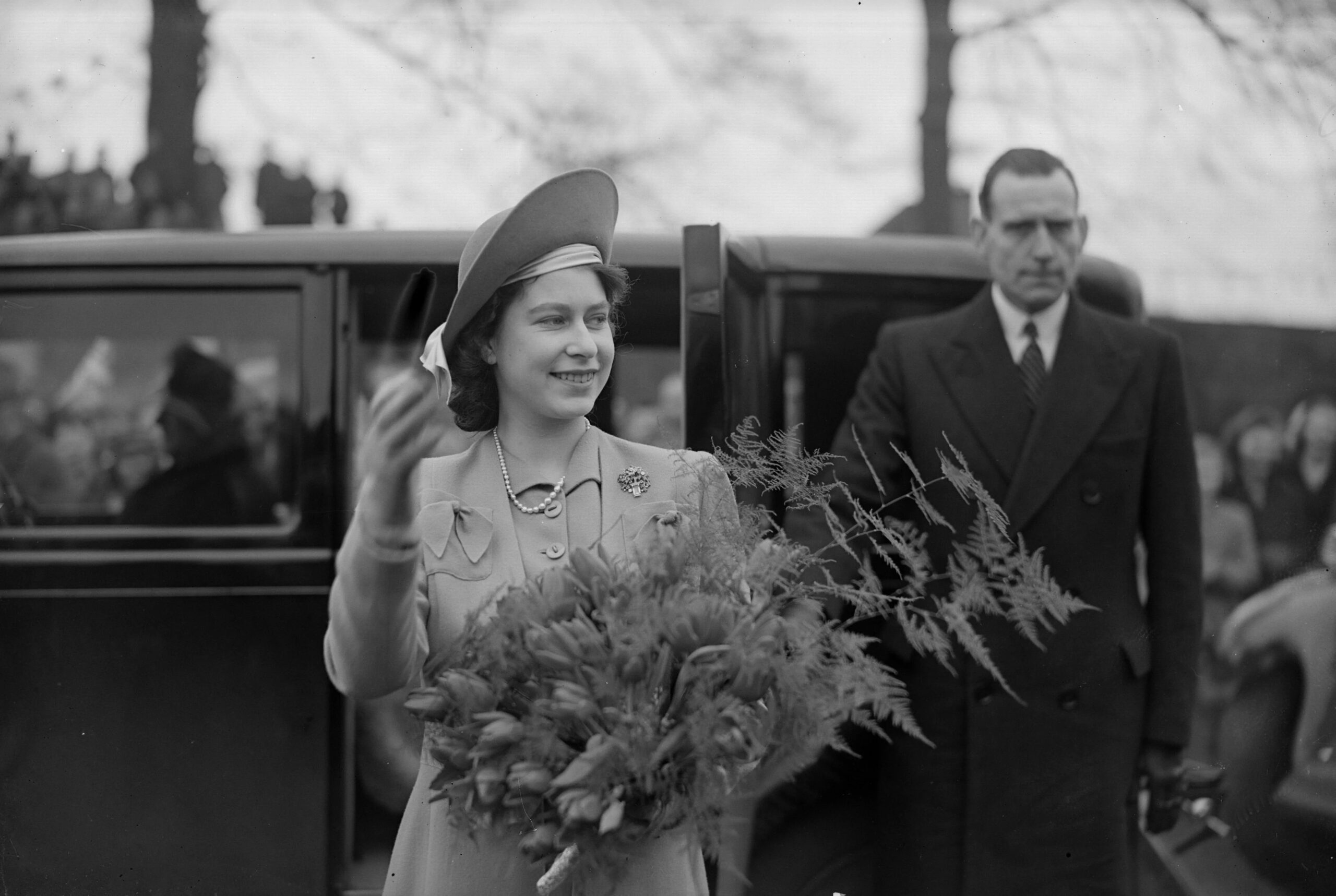
In 1949 she travelled over with her now husband. The couple were conferred the freedom of Belfast at City Hall and were received by Northern Ireland Prime Minister Sir Basil Brooke and the Belfast Lord Mayor Sir William Neill MP. No nationalist councillors were present.
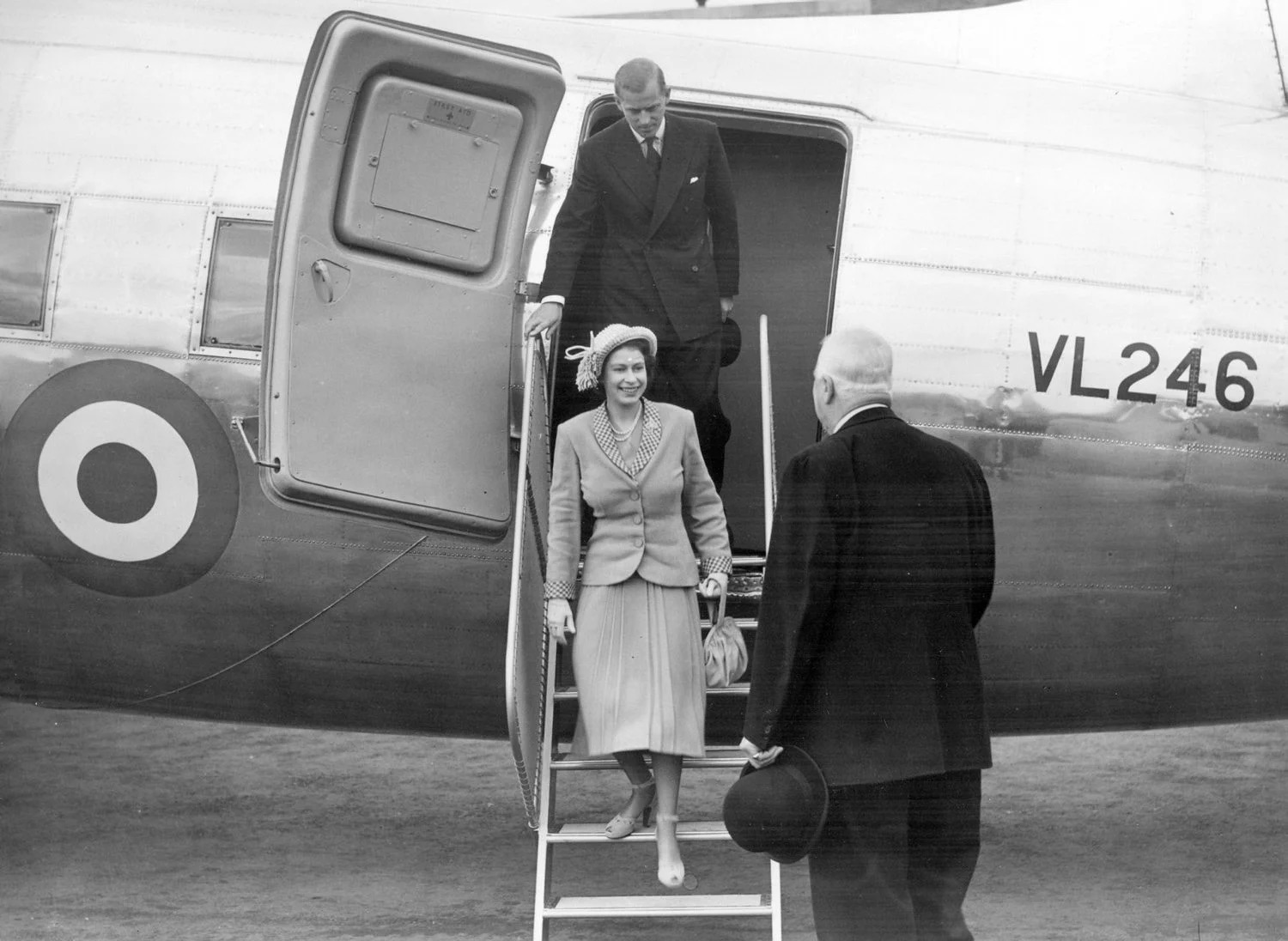
The visit brought a quarter of a million well-wishers onto the streets. The Belfast Telegraph reported at the time: “Against the background of the setting up of the Irish Republic, their welcome is showing that Ulster is unchanged.”

1950s
Coronation visit
Elizabeth II was just 27 years old when she officially became head of state following the death of her father George VI in February 1952. She was crowned in a religious ceremony at Westminster Abbey on 2 June 1953.
The occasion was a morale boost for a nation starved of pageantry following the Second World War and was celebrated with street parties across the United Kingdom.
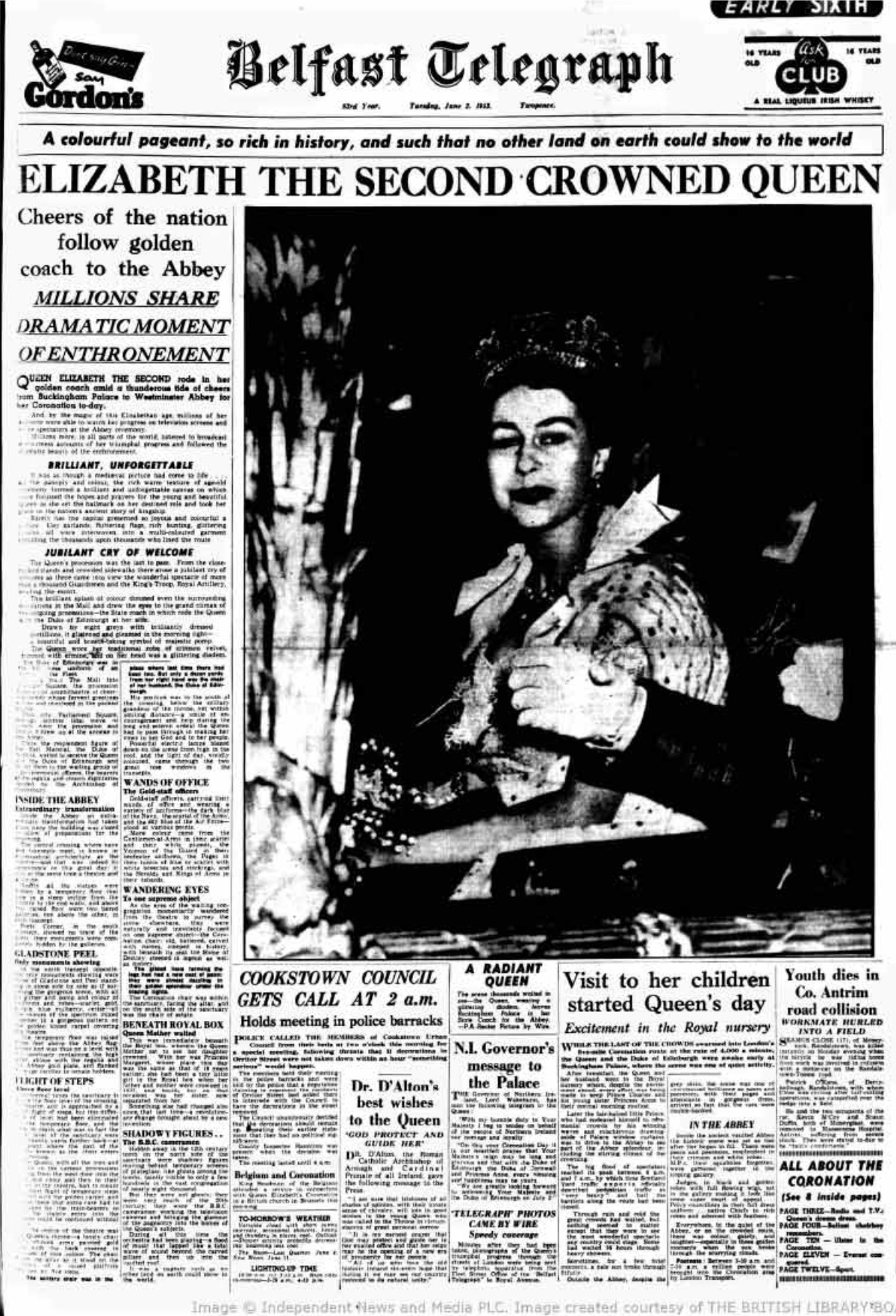
“A colourful pageantry so rich in history that no other land on Earth could show to the world”
The three-hour service took place in front of a congregation of more than 8,000 people. The coronation of a new monarch was also brought into people’s homes for the first time, as TV cameras were permitted to capture the historic event – an estimated 27 million people in Britain watched the event live on black and white TV sets.
Vibrant scenes were captured in towns and villages in Northern Ireland where parades were held to celebrate Elizabeth’s accession to the throne.

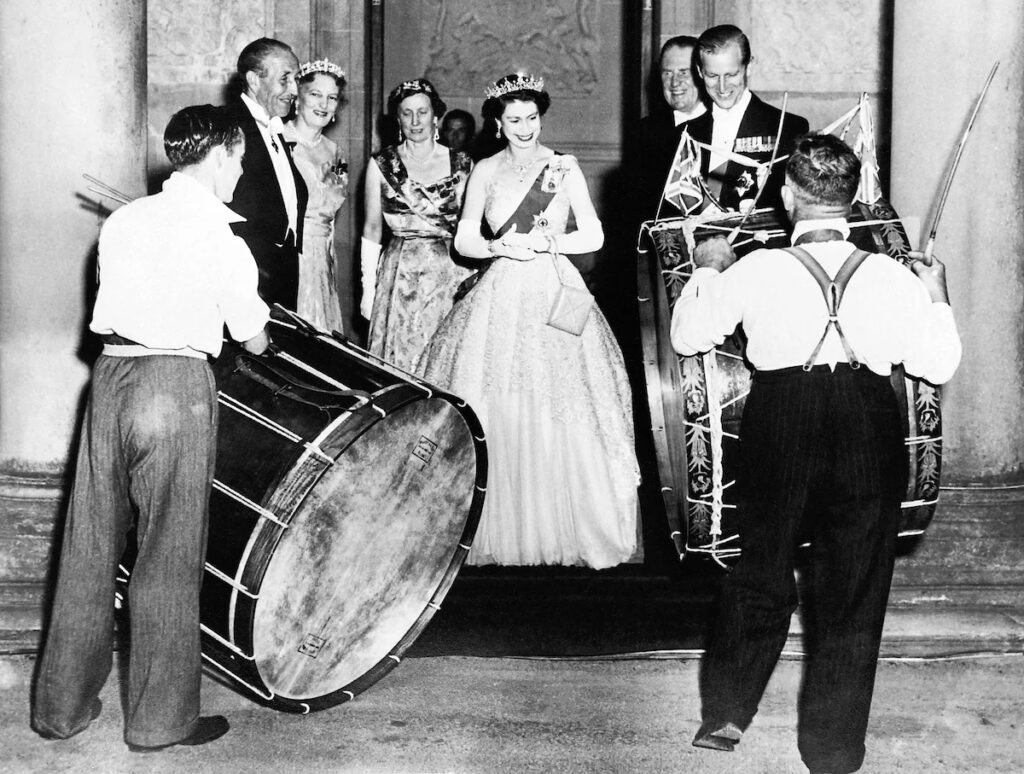
Her second visit as Queen was in 1954 to launch the liner Southern Cross at the Harland & Wolff shipyard in Belfast. In the mid-50s, an IRA campaign along the border gave a hint of more trouble ahead in the next decades, which would make the monarch’s trips come with many more security considerations.




1960s
The opening of Queen Elizabeth II Bridge
1961
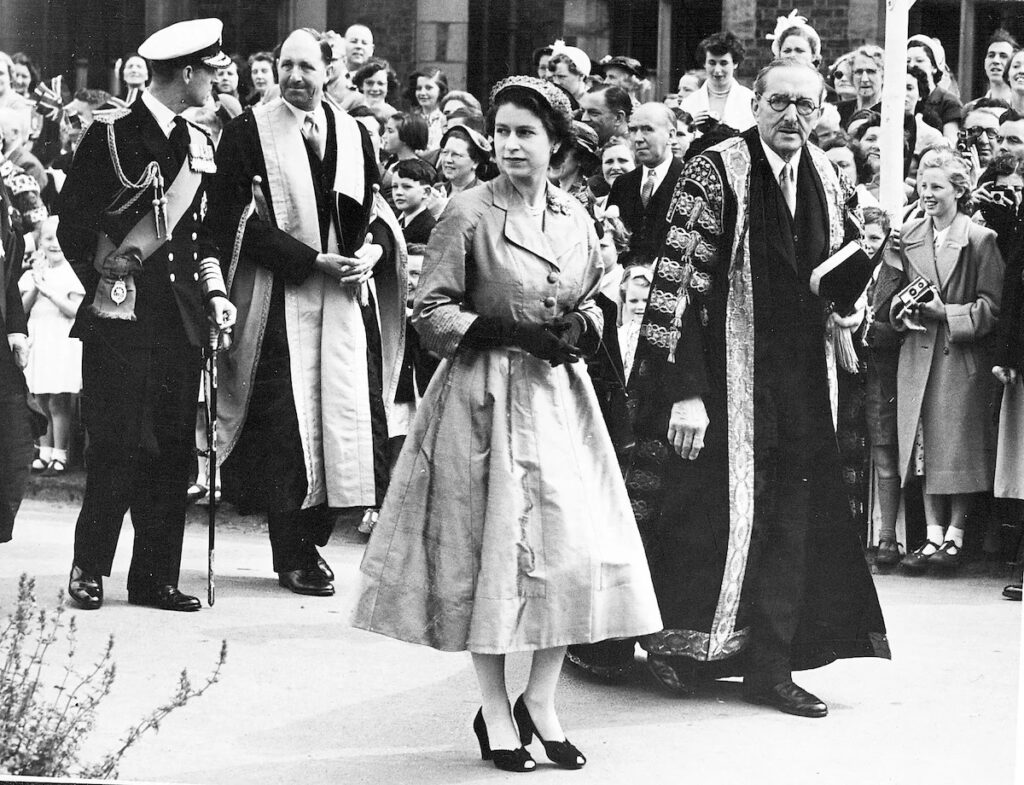
Seven years on and the Queen and Duke of Edinburgh returned with their children Prince Charles and Princess Anne on the royal yacht Britannia. They stepped ashore to visit Carrickfergus and Bangor.
1966
The Queen’s visit in 1966 proved to be a highly charged one. The atmosphere that would lead to the civil rights marches and the clashes that followed was building. A Sunday Times article published a day before her visit questioned whether Her Majesty should be going to Ulster at all.
But the Queen did travel to open a new bridge named in her honour followed by a civic lunch in Belfast City Hall.
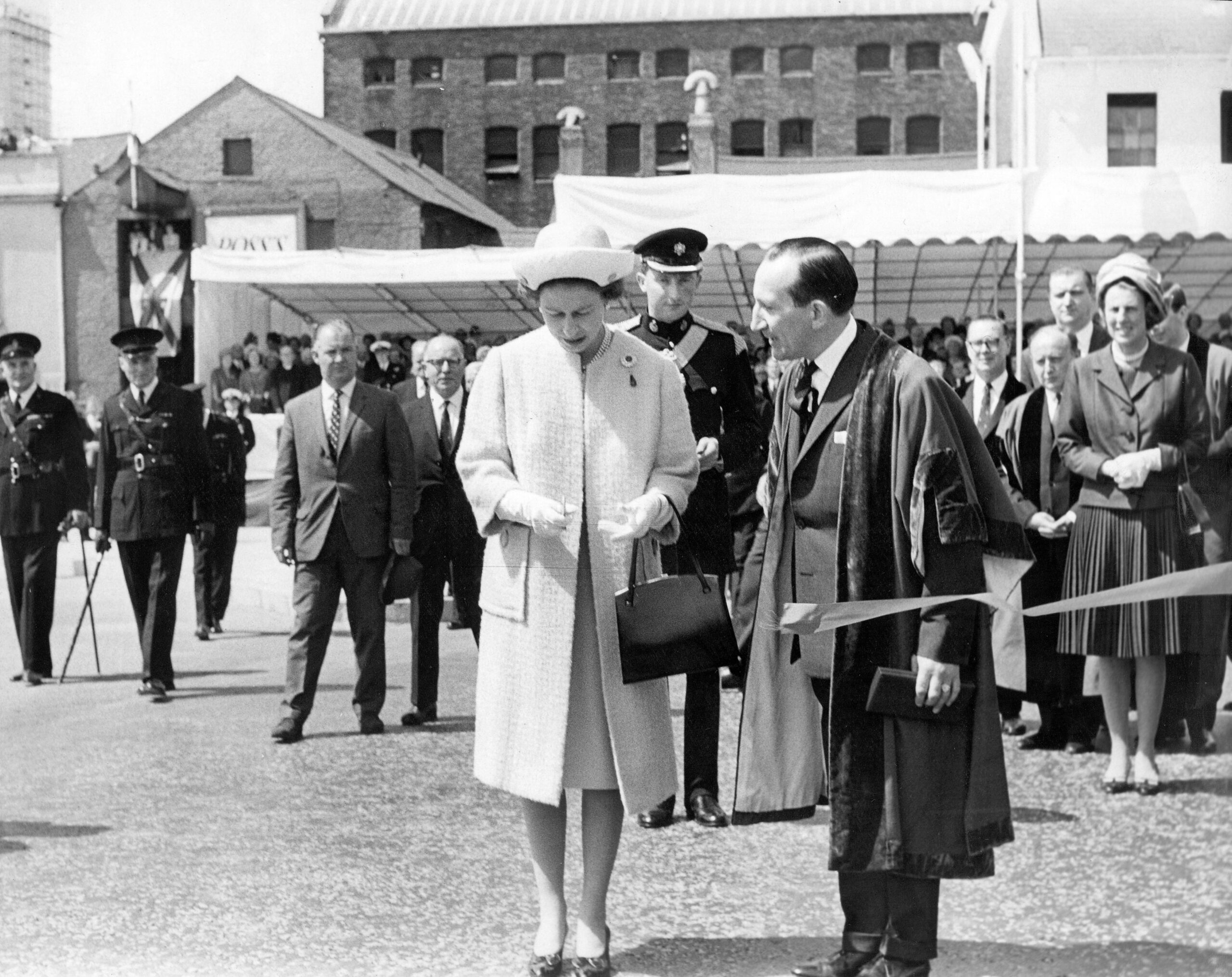
The hint of anti-royalist sentiment became apparent when a concrete block was thrown at the royal limousine as it made its way to the Queen’s next engagement, denting the bonnet as it travelled along Great Victoria Street in Belfast.
A 17-year-old nationalist boy from west Belfast was later arrested and sentenced to four years in jail for the incident. When the Queen and Duke arrived at Hillsborough for a garden party they inspected the damage. “It’s a strong car,” the Queen remarked, noting the slightly dented bonnet.
1970s
Silver Jubilee tour
It would be 11 years until the Queen returned as part of her Silver Jubilee tour of the UK in 1977. The Troubles were raging and the IRA threatened “a visit to remember”, detonating firebombs in shops and business premises in Lisburn. Some 32,000 soldiers and police were deployed to counter the security threat.
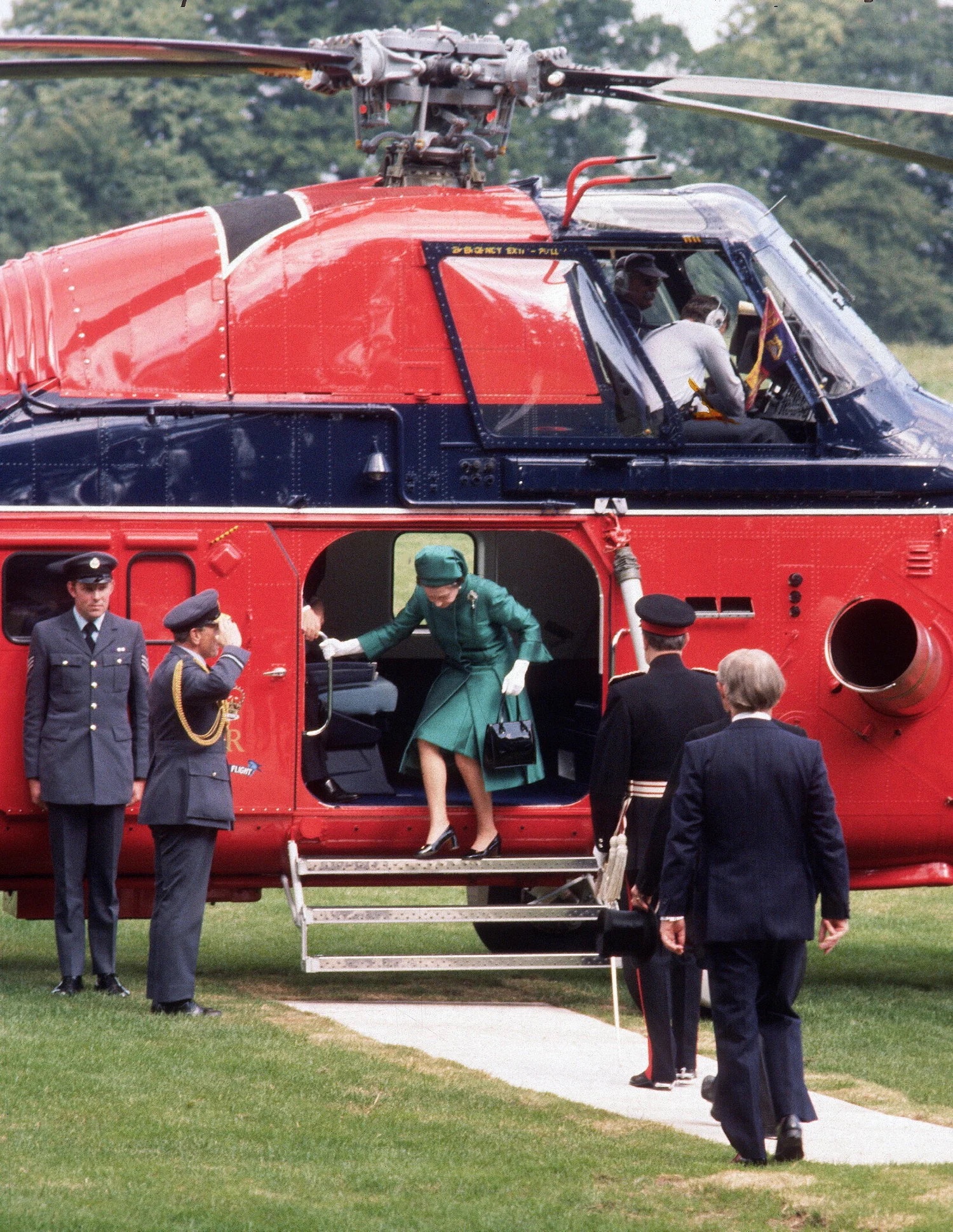
Shortly before the Queen’s arrival an IRA bomb was discovered in the grounds of the new University of Ulster at Coleraine. Despite a request from the government to abandon the visit, the Queen would not be deterred from fulfilling her engagements and resorted to taking a helicopter for the first time to avoid security risks of travelling by road. Prince Andrew accompanied his parents on the Britannia, which was moored off Cultra.
The two-day trip coincided with the sixth anniversary of internment and the eighth anniversary of a 1969 Apprentice Boys march that led to widespread violence and the deploying of soldiers on the streets. On the eve of the royals’ arrival, a 16-year-old Catholic boy was shot dead by the Army and a British soldier was killed in retaliation by the IRA.
John Hume, then deputy leader of the SDLP, accused royal advisers of folly in organising such a visit on “the most emotive days possible”. Republicans would go on to hold protests in Belfast.
Fourteen years passed before security chiefs deemed it safe enough for the Queen to return to Northern Ireland.
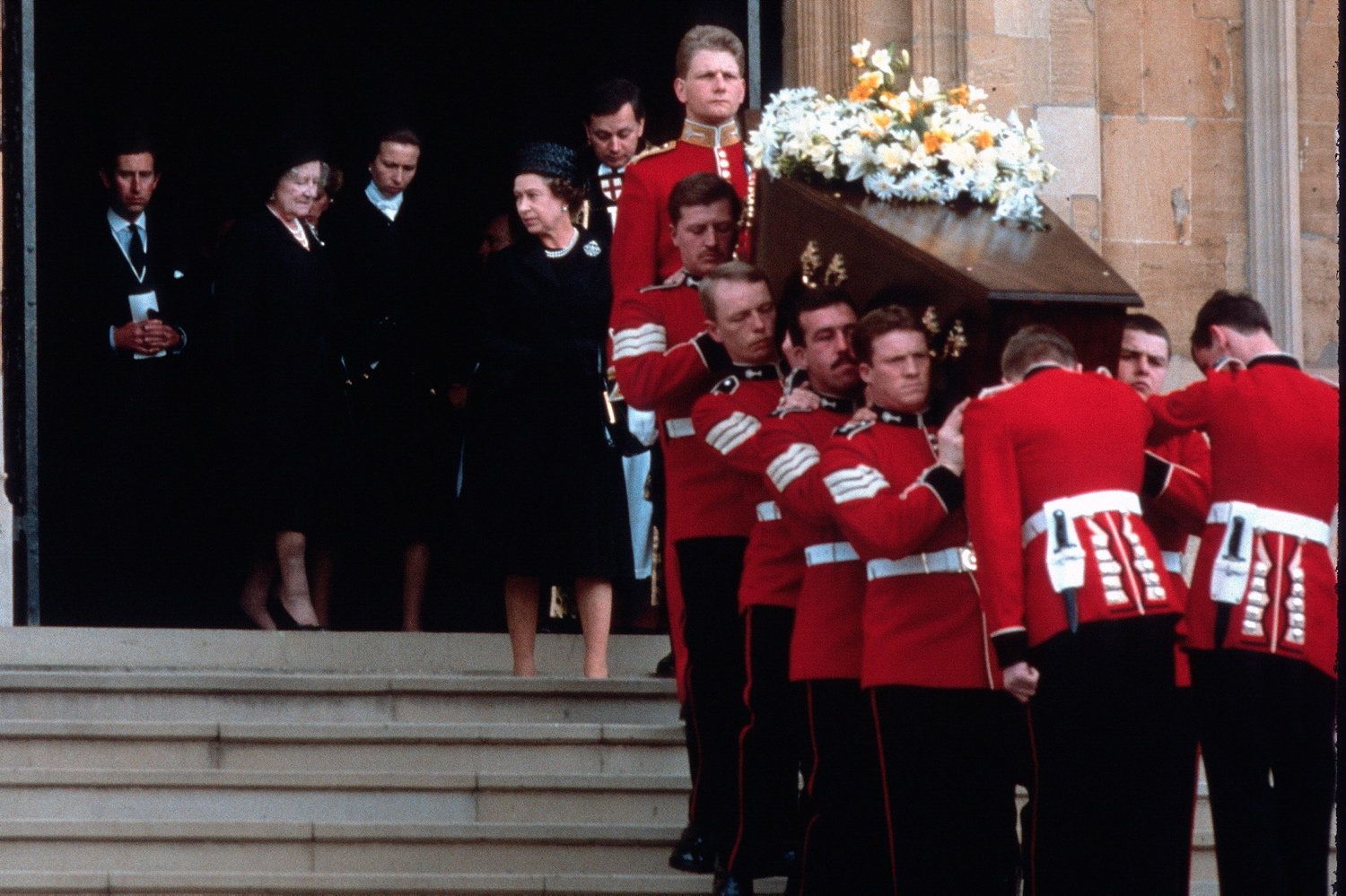
The decade ended in tragedy for the royal family, as the Queen’s cousin Lord Mountbatten was killed by the IRA in August 1979. A bomb went off on his fishing boat while he was holidaying at Classiebawn Castle, Mullaghmore, Co Sligo – killing him and three others.